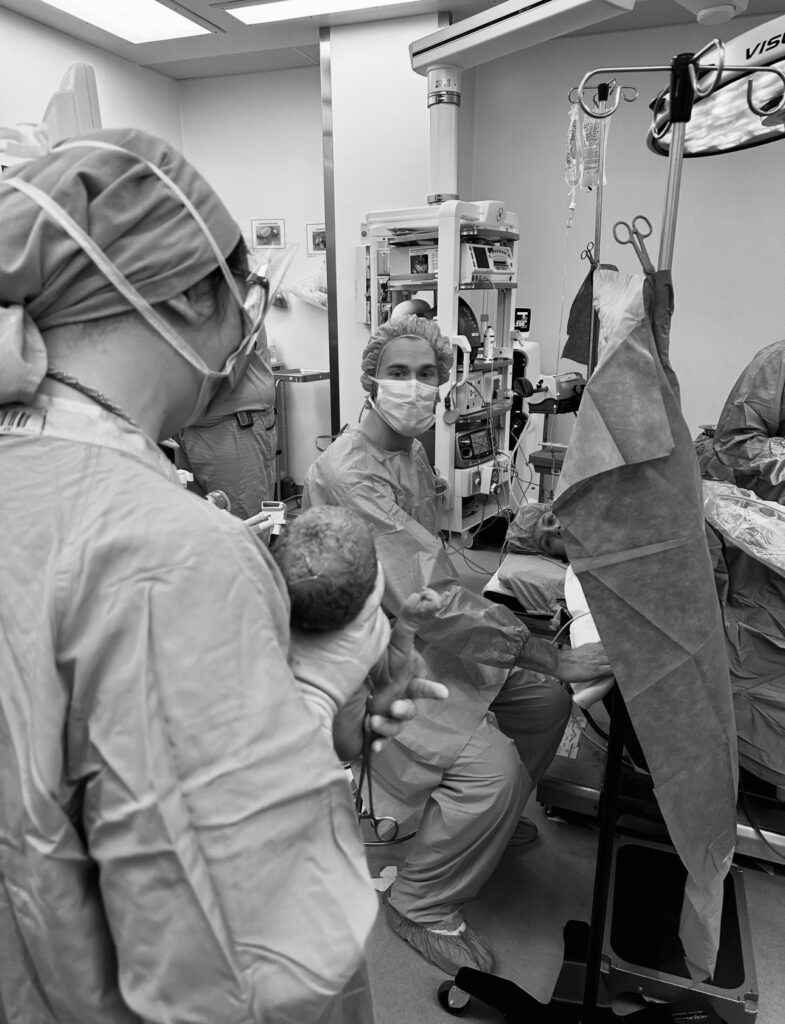
A cesarean section may or may not be something you planned for in your birth experience. Whether your baby is breech, complications arise during pregnancy, or you require an emergency cesarean during labour, the idea of a cesarean birth can feel overwhelming.
The operating room can feel sterile, cold, and unfamiliar, and you may feel very vulnerable going into surgery.
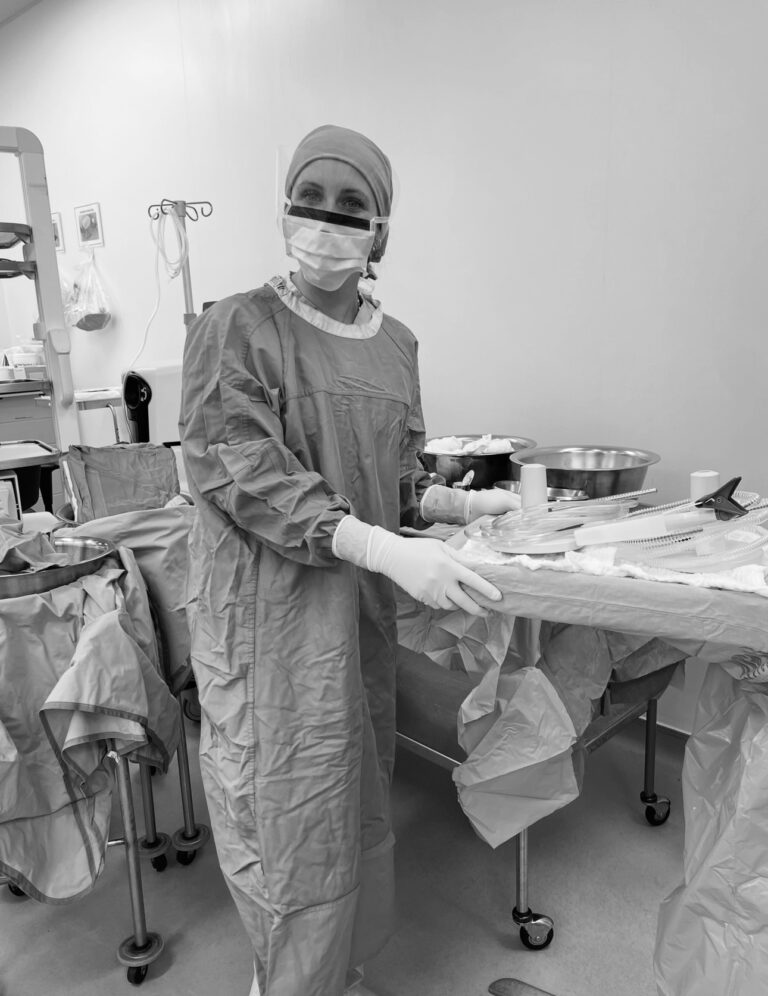
As a labour and delivery nurse who has been part of hundreds of cesarean births—working as a baby nurse, scrub nurse, and circulating nurse—I’ve seen a lot in the operating room. I’m here to walk you through what you can expect.
As a mom who personally had an emergency cesarean section, I can also relate to many of the emotions you may feel: fear, disappointment, nervousness, worry, and also excitement about finally meeting your baby.
Cesarean births can be scheduled or unscheduled, and while every experience is unique, understanding the process can make the day feel much less intimidating.
Below, I’ll walk through what a scheduled cesarean section usually looks like.
Before Your Scheduled Cesarean
If you are having a scheduled cesarean section, your obstetrician will give you a date for your surgery—also known as your baby’s birthday.
A few days before your surgery, a nurse will typically call you to review important details, including:
- When to stop eating and drinking
- Any surgical preparation needed
- How to take your regular medications
- Your health and pregnancy history
This is also a great time to ask any questions you may have if you didn’t get the chance during your last appointment with your OB.
Birth Day
The day has arrived! You may or may not have slept the night before—and that’s completely normal.
When you arrive at the hospital, you will usually go to a postpartum or antepartum room, where a nurse will help prepare you for surgery. Your support person will be with you during this time.
A helpful tip: make sure your support person eats beforehand and brings snacks. It may sound surprising, but support people fainting in the operating room happens more often than you might think!
During this preparation time, your nurse will:
- Review your health history, allergies, and pregnancy information
- Start an IV
- Possibly send some blood work
- Begin IV fluids to keep you hydrated
When it’s time to head to the operating room, you and your support person will usually meet the surgical team, including:
- The baby nurse
- The obstetrician or surgeon
- The anesthesia provider
The team will review your information again to ensure everything is correct and safe.
Typically, you will enter the operating room first, while your support person waits just outside.
In the Operating Room
Once you’re in the operating room, the team will ask a few simple questions such as:
- Your name
- Your birthday
- When you last ate
This is part of a safety check.
Your team will then:
- Check your blood pressure
- Place monitors to track your heart rate, breathing, and oxygen levels
Next comes the spinal or epidural anesthesia.
You will usually sit on the operating table for this. The freezing medication can feel similar to dental freezing and is often the most uncomfortable part of the process, but it helps make the spinal placement much easier.
Once the spinal or epidural is placed, the nurses will help you lie down quickly so the anesthetic spreads primarily to your abdomen rather than your legs and feet.
After that:
- Remaining monitors are placed
- A foley catheter is inserted to keep your bladder empty during surgery
- Your abdomen is cleaned with a surgical prep solution
Most people do not feel pain during these steps—only pressure or touch.
While the prep dries, the surgical team will gown and prepare for the procedure.
A surgical drape is then placed across your chest and abdomen (usually supported by IV poles) so you cannot see the surgical area.
The surgeon will check to ensure you are comfortable and not feeling pain.
Once everything is ready, your nurse will bring your support person into the room, where they will sit beside you.
What You Might Feel During Surgery
Some sensations are very normal during a cesarean birth:
- The freezing medication can sting briefly (similar to dental freezing)
- You may feel pressure, pulling, or tugging
- You should not feel sharp pain
- You may notice different sounds or smells in the room
- Shaking is extremely common
- Nausea can occur—tell your anesthesia provider right away if you feel sick
When Your Baby Is Born
Once surgery begins, babies are usually born quite quickly.
After birth, your OB will often perform delayed cord clamping for about 60 seconds.
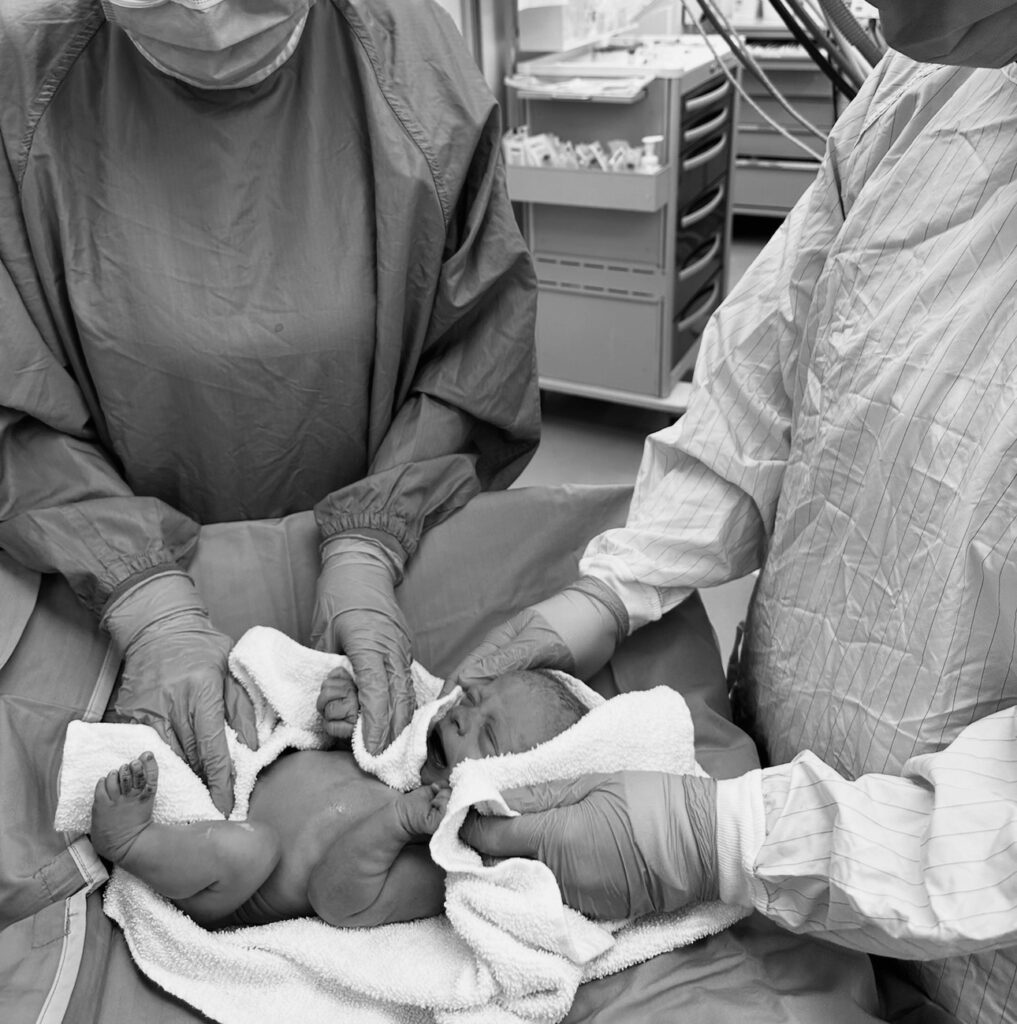
Your baby will then be brought to a nearby warming table.
At the warmer, your baby nurse will:
- Dry your baby
- Stimulate them
- Complete an APGAR assessment
Your support person is usually invited to come over and see the baby during this time.
If your baby is doing well, we will:
- Put a diaper on
- Bring baby over to you
Many parents are able to do skin-to-skin in the operating room. If this is something you’d like, let your nurse know. They can help safely position your baby on your chest and cover you both with warm blankets.
If the birthing parent isn’t feeling well, your support person can also do skin-to-skin.
About 15 minutes after birth, the baby nurse will check vital signs and often weigh the baby. After that, baby can return to your chest or stay wrapped beside you until surgery is complete.
Recovery
At some hospitals, your baby and support person may go to the recovery room briefly (about 5–10 minutes) while your surgical team finishes closing your incision and placing your dressing.
You will then go to the recovery room, where you’ll typically stay for about an hour.
During this time you can:
- Continue skin-to-skin
- Try breastfeeding, if you plan to breastfeed
Your nurse will monitor you closely, checking:
- Heart rate
- Blood pressure
- Breathing
- Oxygen levels
- Vaginal bleeding
These checks usually happen about every 15 minutes.
Your nurse will also watch for your spinal or epidural to wear off, and you should gradually begin to feel and move your feet again.
Once you are stable, you will be transferred to your postpartum unit, where you will stay for the next few days.
What to Expect in Recovery
Some common experiences in recovery include:
- Continued shaking or chills
- Nurses pressing on your abdomen to check your uterus (fundus) and bleeding
- Needing to lie fairly flat at first to avoid nausea
- Breastfeeding feeling awkward initially due to limited positioning
All of this is very normal, and your nurse will help guide you through it.
Cesarean Birth vs. Vaginal Birth
While cesarean and vaginal births are different in many ways, there are also many similarities.
With both types of birth you can:
- Do skin-to-skin
- Have delayed cord clamping
- Have a support person present
- Take lots of photos
- Receive frequent vital sign and fundal checks
Final Thoughts
The decision between a vaginal birth and a cesarean birth is something to discuss with your healthcare provider and support team.
Ask questions, explore your options, and think about ways you can still make your birth experience meaningful and personal.
As a nurse, I’ve witnessed many beautiful births—and many of them were cesarean sections.
As a mom, I also understand how difficult it can feel when birth plans change. If you had your heart set on a vaginal birth and things didn’t go that way, it’s completely okay to feel disappointed.
But know that there are still many ways to make your birth special, meaningful, and uniquely yours.